Fishtail Monogram Regular Font: Integrating Whimsical Typography into Your Creative Workflow
In the realm of design and production, typography is rarely just about legibility; it is a strategic asset that dictates the tone, marketability, and perceived value of a product. While serif and sans-serif fonts form the backbone of corporate communication, niche decorative fonts drive the personalized goods market. One such asset gaining traction in the print-on-demand and crafting sectors is the Fishtail Monogram Regular Font. Far from being a standard script, this typeface offers a distinct aesthetic inspired by the fluidity of fish tails, evoking a sense of summer, movement, and organic elegance. For professionals ranging from Etsy shop owners to freelance graphic designers, understanding how to integrate this specific style into a production workflow is essential for maximizing efficiency and creative output.
Understanding the Aesthetic and Technical Profile
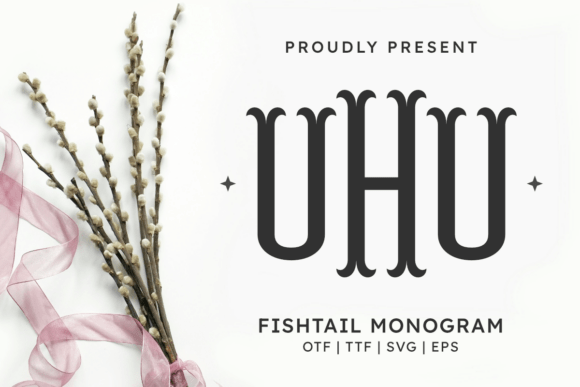
The Fishtail Monogram Regular Font distinguishes itself through its decorative elements, which mimic the bifurcated shape of a fish tail. This design choice makes it a "sneaky cool" option—it retains the elegance of traditional monograms while introducing a playful, seasonal twist. In a broader design process, this font occupies the "specialty" category. It is not intended for body text or dense informational layouts. Instead, it serves as a focal point for headlines, logos, and personalized initials where visual impact is the priority.
When assessing this font for your toolkit, consider the technical execution of the strokes. The "fishtail" detailing usually appears at the terminals of the letters or within the swashes. This level of ornamentation requires careful handling regarding line weight. If you are working with cutting machines like a Cricut or Silhouette, the intricacy of the tail details will influence your blade pressure and mat adhesion settings. Therefore, the integration of Fishtail Monogram Regular begins not with typing, but with technical testing.
Workflow Integration: From Concept to Physical Product
For creators and entrepreneurs, a font is a tool that must fit into a pipeline involving ideation, design, prototyping, and manufacturing. The Fishtail Monogram Regular Font is particularly versatile across this spectrum, but it requires specific management strategies to be effective.
1. The Ideation and Mood Boarding Phase
Before opening your design software, it is crucial to identify where this font’s aesthetic aligns with current trends. Because the design is inspired by summer and marine motifs, it fits perfectly into seasonal collections. When planning a product line for Q2 or Q3, a project manager or small business owner should earmark this font for specific SKUs such as beach tote bags, resort wear, or summer wedding stationery. During the mood boarding phase, pair the Fishtail Monogram with complementary assets—perhaps nautical icons, anchor graphics, or tropical foliage—to ensure the final design tells a cohesive visual story.
2. Digital Design and Composition
Once the concept is solidified, the implementation moves to vector or raster software. Here, the Fishtail Monogram Regular Font interacts with layout tools. A practical tip for Adobe Illustrator or Affinity Designer users is to convert the text to outlines immediately after finalizing the wording. This allows you to manually adjust the kerning (space between letters), which is often necessary with decorative scripts to prevent the "tails" of adjacent letters from colliding.
Furthermore, consider the hierarchy of the design. If you are creating a logo for a client, the font should be the dominant visual element. If you are designing a t-shirt, the font might need to be scaled down to fit a chest pocket area. In this case, ensure that the "fishtail" details remain legible at smaller sizes. If the details become muddy, the font is being pushed beyond its optimal technical limits, and a simpler typeface should be substituted for the sub-text.
3. Production and Manufacturing Constraints
The true test of a font’s utility lies in the production phase. For digital products, such as planners or digital stickers sold on platforms like Canva or Creative Market, Fishtail Monogram Regular is straightforward—you simply embed the font file or rasterize the layer.
However, for physical manufacturing, the workflow changes. In print-on-demand (POD) environments, high-contrast designs often yield the best results. If the fishtail details are too thin, they may not transfer well onto textured fabrics like heavy cotton sweatshirts or canvas tote bags. A practical workflow step here is to perform a "stress test" print on a sample fabric. If the ink bleeds into the fine details of the fishtail, you may need to thicken the strokes manually in your vector software.
For vinyl cutting projects, the Fishtail Monogram requires a "weed-friendly" approach. Intricate negative spaces within the tail design can be tedious to weed (remove excess vinyl). To streamline this process, use a slightly heavier font weight if available, or simplify the design by removing the most delicate swashes using the node editing tool in your cutting software.
Practical Application Across Product Categories
The versatility of the Fishtail Monogram Regular Font allows it to be deployed across a wide array of merchandise. However, successful deployment requires matching the font to the product's physical constraints and user expectations.
- Apparel (T-shirts, Sweatshirts, Baby Sweats): For apparel, the font works best as a central monogram. When designing for "Baby Sweats," the playful nature of the fishtail adds a whimsical touch that appeals to parents looking for unique nursery decor or gifts. Ensure the font size is large enough to maintain softness in the print, avoiding a "plastic" feel on the fabric.
- Drinkware (Mugs, Tumblers): Curved surfaces present a unique challenge. Text must be arched or warped to fit the cylinder. The Fishtail Monogram handles curves well due to its organic nature, but you must account for the distortion of the tail elements near the handle or the edges of a tumbler wrap.
- Home Decor (Wall Art, Pillows): These items allow for the largest scale of the font. Here, the details of the fish tail inspiration can be fully appreciated. This is an excellent use case for high-resolution digital downloads or high-DPI printing.
- Accessories (Keychains, Tote Bags, Stickers): These smaller items require high contrast. A solid fill color usually works better than gradients or distressed textures when using this font on small surface areas to ensure the monogram remains the focal point.
Organization and Asset Management
For freelancers and agencies, managing font assets is a critical part of workflow efficiency. If you purchase the Fishtail Monogram Regular Font, it should be immediately categorized in your font manager (such as FontBase or NexusFont) under a "Decorative" or "Seasonal" tag. This prevents it from being lost among hundreds of standard sans-serifs and ensures that when a client requests a "summer vibe" or "playful monogram," you can retrieve it within seconds.
Additionally, always maintain a "Fonts Used" log for client projects. Documenting that you used Fishtail Monogram Regular ensures that if the client requests edits six months later, you know exactly which asset to activate. This level of organization prevents workflow bottlenecks and demonstrates professionalism.
Long-Term Usability and Quality Control
Trends in typography shift, but monograms remain a perennial favorite in the personalized goods market. The specific "fish tail" decoration gives the Fishtail Monogram Regular Font a distinct identity that can differentiate a brand from competitors using generic script fonts. However, to maintain long-term usability, it is vital to use the font intentionally. Overusing a decorative font can dilute its impact.
Quality control involves checking the font against different backgrounds. A dark fishtail monogram might disappear on a dark background, while a light one might lack punch on a busy pattern. Always test the font against various textures and colors to ensure accessibility and readability. By treating the Fishtail Monogram Regular Font as a specialized tool rather than a default setting, creators can leverage its unique aesthetic to produce high-quality, market-ready products that resonate with a summer-loving, style-conscious audience.